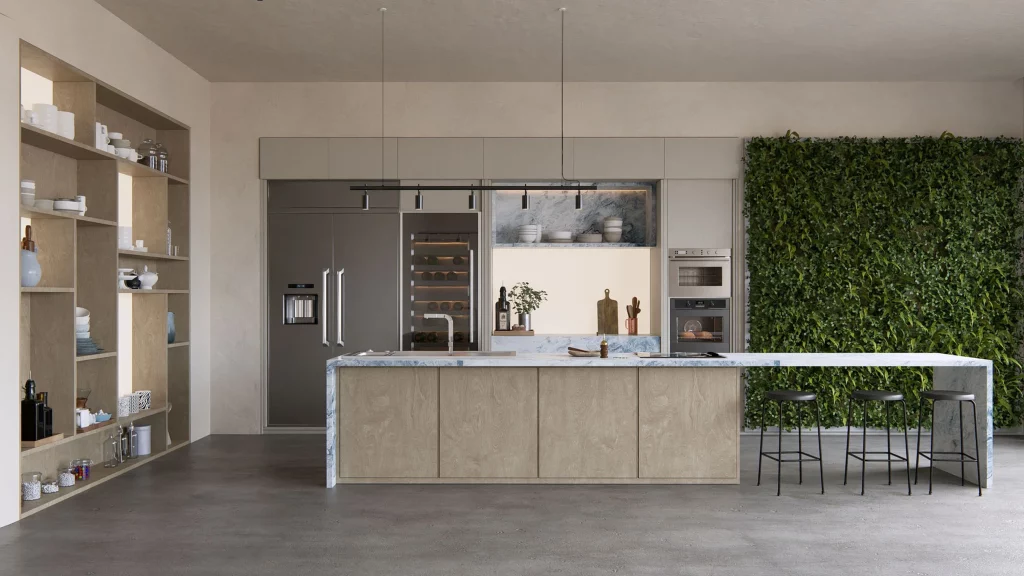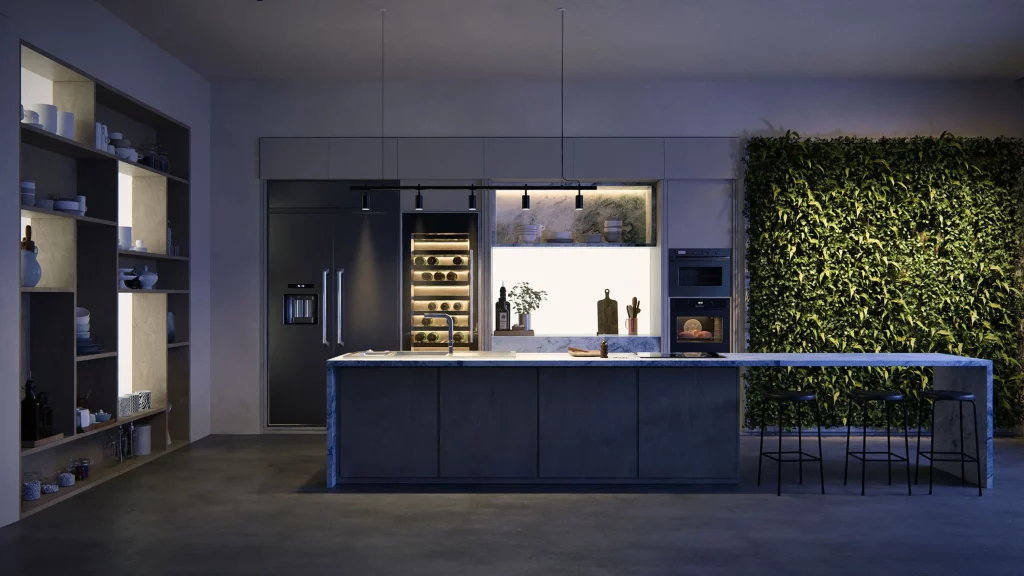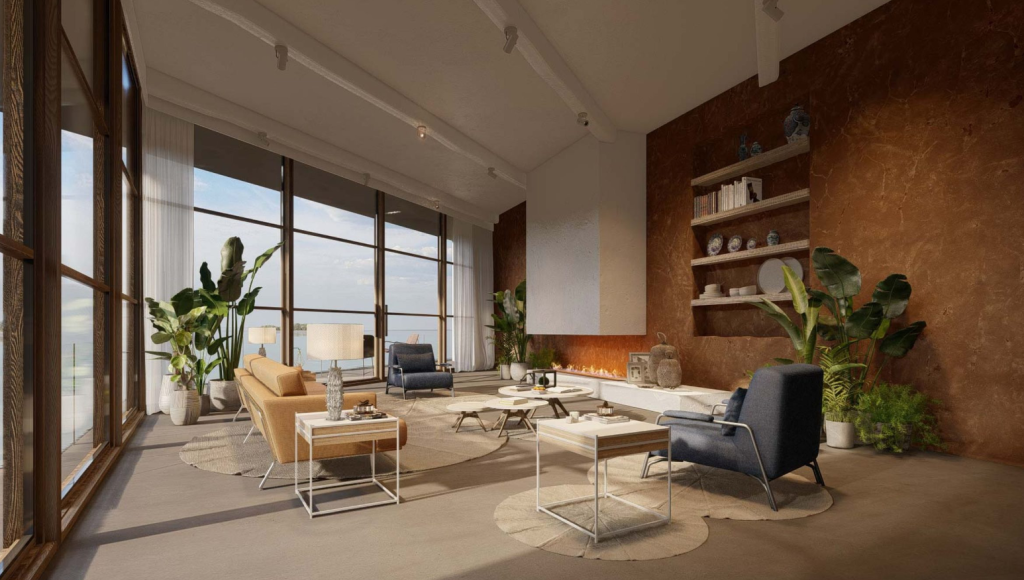
Rendering interiors in Lumion can be challenging, especially when working in small spaces, where every angle and light source has a major impact on the final result. However, Lumion’s latest versions make it possible to achieve warm, realistic, and well-lit images even in compact environments.
In this guide, you’ll find professional techniques for interior rendering in Lumion, including model preparation, lighting, materials, optimization, and camera tips. And remember: Aufiero Informática is an official Lumion reseller in Latin America, offering genuine licenses and expert advice.
Preparing the Model: The Foundation of a Good Interior Render
Before opening Lumion, the work begins in your modeling software—SketchUp, Archicad, Rhino, Revit, etc. Small interiors require a clean and well-organized structure.
1. Maintain accurate scale
In tight spaces, a 5 cm mistake can drastically affect perception. Double-check doors, heights, and wall thicknesses.
2. Separate objects by material
The cleaner the model, the easier it is to adjust materials inside Lumion.
3. Simplify hidden geometry
Anything not visible from the camera can be reduced or removed to improve performance.
Lighting: The Most Important Factor in Lumion Interior Renders
Lighting makes or breaks an interior scene. In small spaces, controlling light correctly is essential for realism.
1. Enhance natural light
- Increase window openings for brighter, editorial-style renders.
- Use Sky and Sun to control the time of day and sun angle.
- Add Area Lights in front of windows to simulate soft light bounce.
2. Avoid dark interiors
To prevent flat or muddy renders:
- Slightly increase Ambient Light.
- Use Fill Lights to soften harsh shadows.
- Preview scenes in Realistic or High mode.
3. Mix artificial and natural light
For a balanced atmosphere:
- Use Spotlights with wide aperture.
- Adjust Kelvin color temperature to avoid overly warm tones.
- Reproduce real fixtures for consistent lighting design.
Materials: Achieving Realistic Surfaces in Small Spaces
Interior surfaces become focal points in tight spaces. Lumion’s PBR materials, normal maps, and displacement options help elevate realism.
1. Use high-quality textures
Small spaces reveal texture details:
- Choose PBR materials with full map sets.
- Adjust glossiness and reflectivity carefully.
2. Correctly scale materials
Oversized tiles or wood grains ruin realism. Adjust scale inside Lumion to match real proportions.
3. Add imperfections
Perfect surfaces look fake:
- Use Weathering for wood and concrete.
- Apply Edges to soften sharp corners.
- Introduce subtle tonal variation to break repetition.
Decor and Assets: Less Is More in Small Interiors
Lumion offers a huge asset library, but small spaces require restraint.
1. Choose a few well-placed objects
Examples:
- A high-quality sofa
- A table with one or two accessories
- A plant to add life
Avoid overfilling the scene.
2. Prefer HD or premium assets
Higher-quality furniture or decor improves realism instantly.
3. Avoid scaling inconsistencies
Imported models often require size adjustments.
Camera and Composition: Making Small Spaces Look Bigger
The camera is key to avoiding cramped-looking renders.
1. Use focal lengths between 18 mm and 25 mm
Too wide = distortion
Too narrow = flattened space
Aim for a natural balance.
2. Raise the camera slightly
Heights around 1.20–1.40 m often create pleasing compositions.
3. Use guiding lines
Floor and wall lines should lead the eye toward your focal point.
Optimization Tips for Heavy Interior Scenes
To keep Lumion running smoothly:
- Disable shadows on lights that don’t affect the final shot.
- Use proxy materials for distant objects.
- Limit the use of 3D plants indoors.
- Turn off global effects during editing.
Best Lumion Effects for Interior Rendering
1. Real Skies suitable for interiors
Choose soft, neutral skies.
2. Global Illumination
Essential for natural light bounce.
3. Exposure + Color Correction
Fine-tune the balance of light and shadow.
4. Reflection Planes
Use them on floors, glass, and glossy surfaces.
5. Hyperlight
Adds smooth, natural light ambience.
Conclusion: Lumion Is an Ideal Tool for Small Interior Rendering
Rendering compact interiors requires skillful lighting, good material workflow and careful composition. Lumion provides all the tools needed to achieve professional, photorealistic results.
For original licenses, upgrades, or technical advice, Aufiero Informática can assist you as an official Lumion reseller, with support in Spanish and Portuguese.